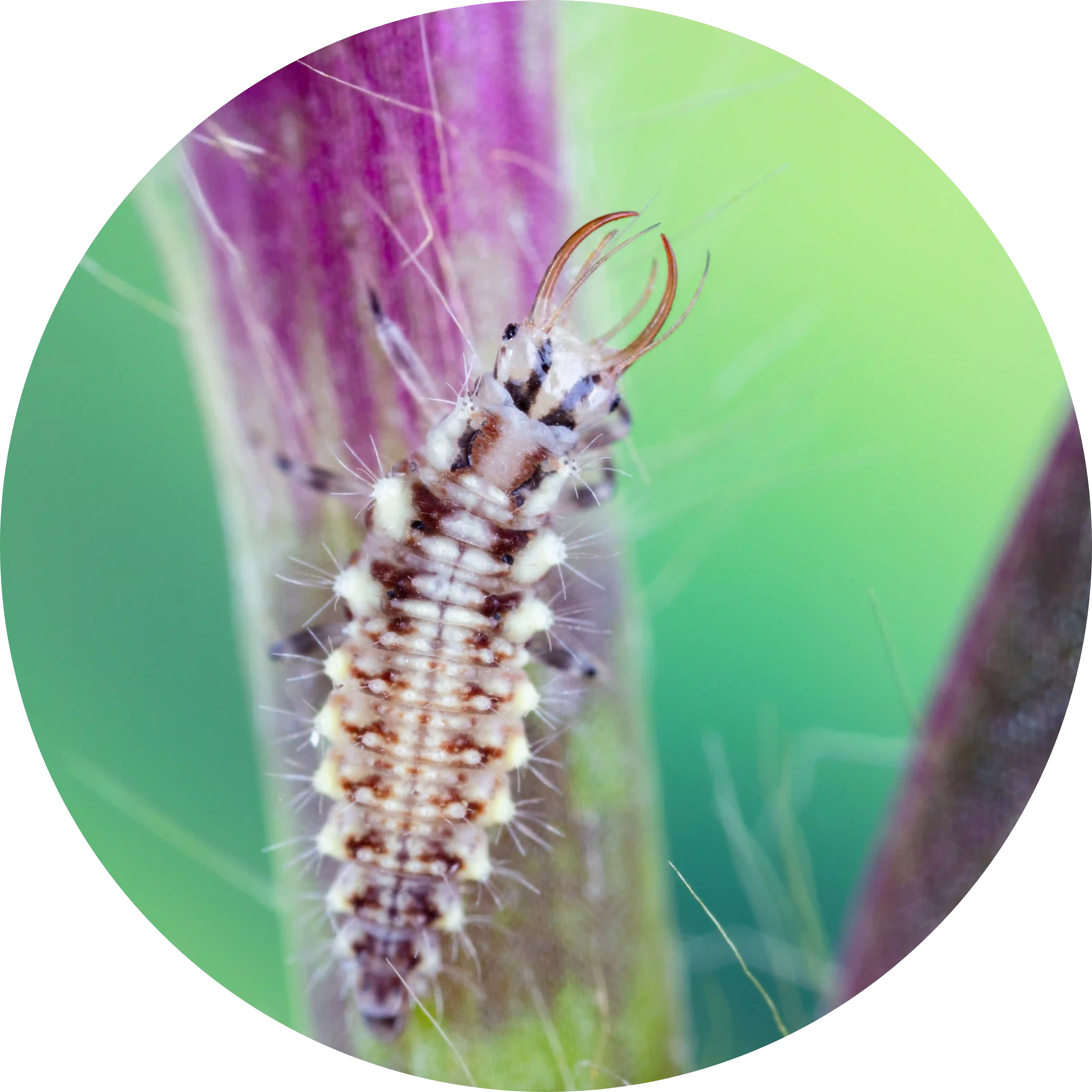



Pest and Beneficial Species Identification Lab
Do you truly know which predatory mites and insects are active in your crop?
Misidentification is more common than most growers realize. Look-alike species can behave very differently—and the wrong identification can compromise your entire IPM program.
The Anatis Applied Taxonomic Lab provides growers, consultants, and researchers with free, science-based identification of mites and insects. Our mission is to support the agricultural community by improving the accuracy of pest and beneficial identification and helping prevent the consequences of misidentification.
What Our Taxonomic Lab Provides
FAQAt the Anatis Applied Taxonomic Lab, identifications are performed by world-renowned PhD specialists alongside highly qualified entomologists and acarologists, ensuring absolute scientific accuracy.
- Identification of agricultural pests
- Identification of beneficial insects and predatory mites
- Analysis of live or dead samples (mail-in or in-person)
- Recommendations aligned with IPM best practices
- Educational guidance on species differences and their implications for biological control
- Support for researchers requiring verified species before trials
- Support for growers, consultants, students, and the general public
- Assistance to help avoid common misidentification errors
Understanding Pest & Beneficial Identification:
A Key Step in IPM Strategy
Receiving the wrong species—whether pest or beneficial—can seriously disrupt your IPM program, leading to poor control results, unnecessary treatments, wasted budget, and avoidable crop losses.

Misidentification can lead to:
- Incorrect matching between pests and biological control agents
- Failure of IPM programs despite correct implementation
- Misinterpretation of monitoring data
- Wasted time, money, and resources
- Inaccurate research results when species are misrecorded

Accurate identification enables:
- Proper selection of biological control agents
- Stronger, more stable IPM programs
- Early detection of new or emerging pests
- Reliable field and research data
- Improved long-term crop protection strategies
Why Growers and Researchers Trust the Anatis Applied Taxonomic Lab
Our mission is not only to identify your insects and mites, but also to help you understand the implications of each identification and how it affects your IPM decisions.
- Identifications are performed by world-renowned PhD specialists, supported by highly qualified entomologists and acarologists with decades of experience in taxonomy and biological control.
- Our results are honest, science-based, and completely unbiased, ensuring growers receive accurate information on which to base their IPM strategies.
- Every identification is directly connected to practical IPM outcomes, helping growers make informed biological control decisions.
- By preventing misidentification, the lab helps growers avoid costly mistakes and reduce unnecessary economic losses.
- All services are completely free and accessible to growers, consultants, educators, and researchers.
- Our work contributes to a deeper understanding of both pest and beneficial species — and a growing sample volume strengthens our ability to discover new beneficial organisms and advance biological control knowledge across the industry.
Did you know?
Most pest and predatory mite species cannot be reliably identified without specialized taxonomic tools. Understanding species differences is essential for successful biological control.
Our lab not only identifies your samples — we teach you why identification matters, how species differ, and how these differences influence the performance of your IPM program.
How to send samples
You may send specimens by mail or in person.
Leaf samples
Select a symptomatic leaf that clearly shows the issue. Using a soft brush, gently transfer as many individual mites or insects as possible into a vial containing 75% isopropyl alcohol (approximately 10 specimens per sample).
Label each vial using a pencil (not a pen), indicating the collection site, date, and host plant. Place the label inside the vial and seal the vial with parafilm to prevent leakage.
Soil samples
Collect approximately 500 g of soil in a clean container. Prepare a paper label using a pencil (not a pen) with the collection site, date, and host plant, and place it inside the container, then seal with parafilm.
Ideally, soil samples should be collected on the day of shipping. If this is not possible, samples may be stored on the lowest shelf of a refrigerator for a maximum of 2 days, then shipped.
To prevent freezing during transit, we recommend using an insulated shipping box.
Once the samples are prepared, please ship them or drop them off at the following address:
1976 Setterington Drive
Kingsville, ON N9Y 2E5
Phone: 519-521-7247
Our team will contact you with results, or with follow-up questions if needed, to ensure scientifically accurate identification.
FAQ
No. Most predatory mites cannot be identified reliably without specialized taxonomic tools, high-magnification microscopy, and expert training.
You may send agricultural pests, beneficial insects, predatory mites, unknown arthropods, and mixed samples.
It depends on the type of sample.
- Foliar samples
These specimens must be sent dead, preserved in airtight containers filled with isopropyl alcohol, according to the sample preparation guidelines. - Soil samples
These samples must be sent live, without alcohol, to allow for proper extraction and identification of the organisms present.
Use an airtight, leak-proof vial or tube suitable for postal shipping. For foliar samples, ensure the specimen is completely submerged in isopropyl alcohol.
Isopropyl alcohol preserves key morphological structures needed for accurate taxonomic identification, particularly for mites and small insects.
Yes. All identification services provided by the Anatis Applied Taxonomic Lab are free for growers, consultants, educators, and researchers.
Turnaround time varies depending on the sample type and condition. The team will contact you if additional information is needed.
Photos are optional but can support preliminary assessment and accelerate the identification process.
Yes. Multiple samples can be submitted, but each sample must be placed in a separate, clearly labeled container. This ensures accurate processing and prevents cross-contamination.
No problem — choose “Unknown” in the form. Our lab will identify it and explain its role in the crop.